Refreshed website and 3D product renders
Asperitas is a Dutch deep-tech startup based in Amsterdam that focuses on building sustainable cooling systems for high-compute needs. Their immersive cooling technology stands in sharp contrast to the noisy, power-hungry datacenter cooling approach, taking much less space, running in different environments and using less heat and energy.
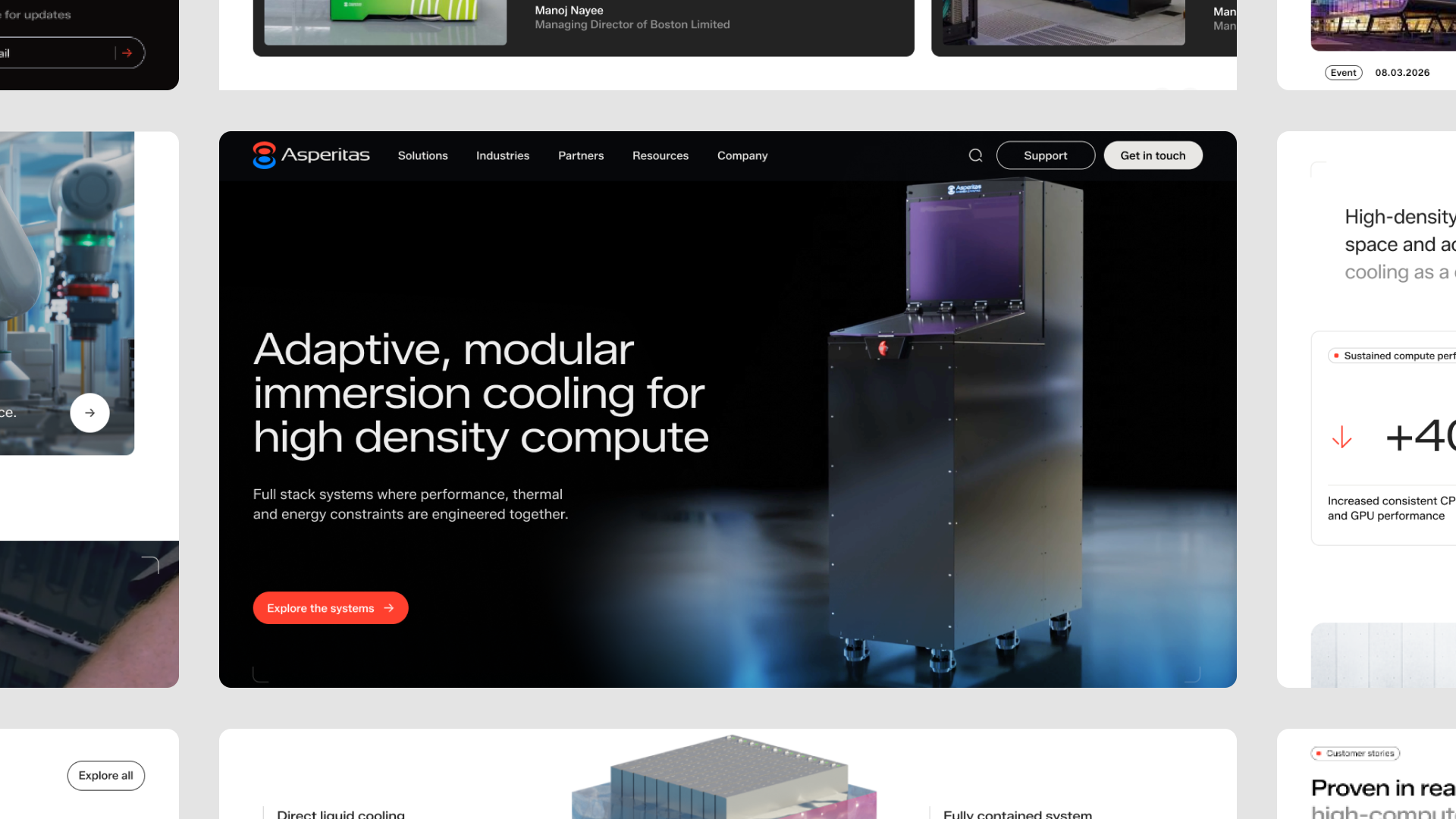
I've been working with Asperitas for several years now and with the launch of a new product, we've decided to give the existing website a new fresh look and create some 3D renders and animations based on prototype CAD files for the launch.
Before moving to the design stage, we agreed on the general direction of the brand refresh by using a styleboard and also made sure the new design will stand out from the competition, which mostly was using a blocky style with sharp corners and dark blue colors and imagery.
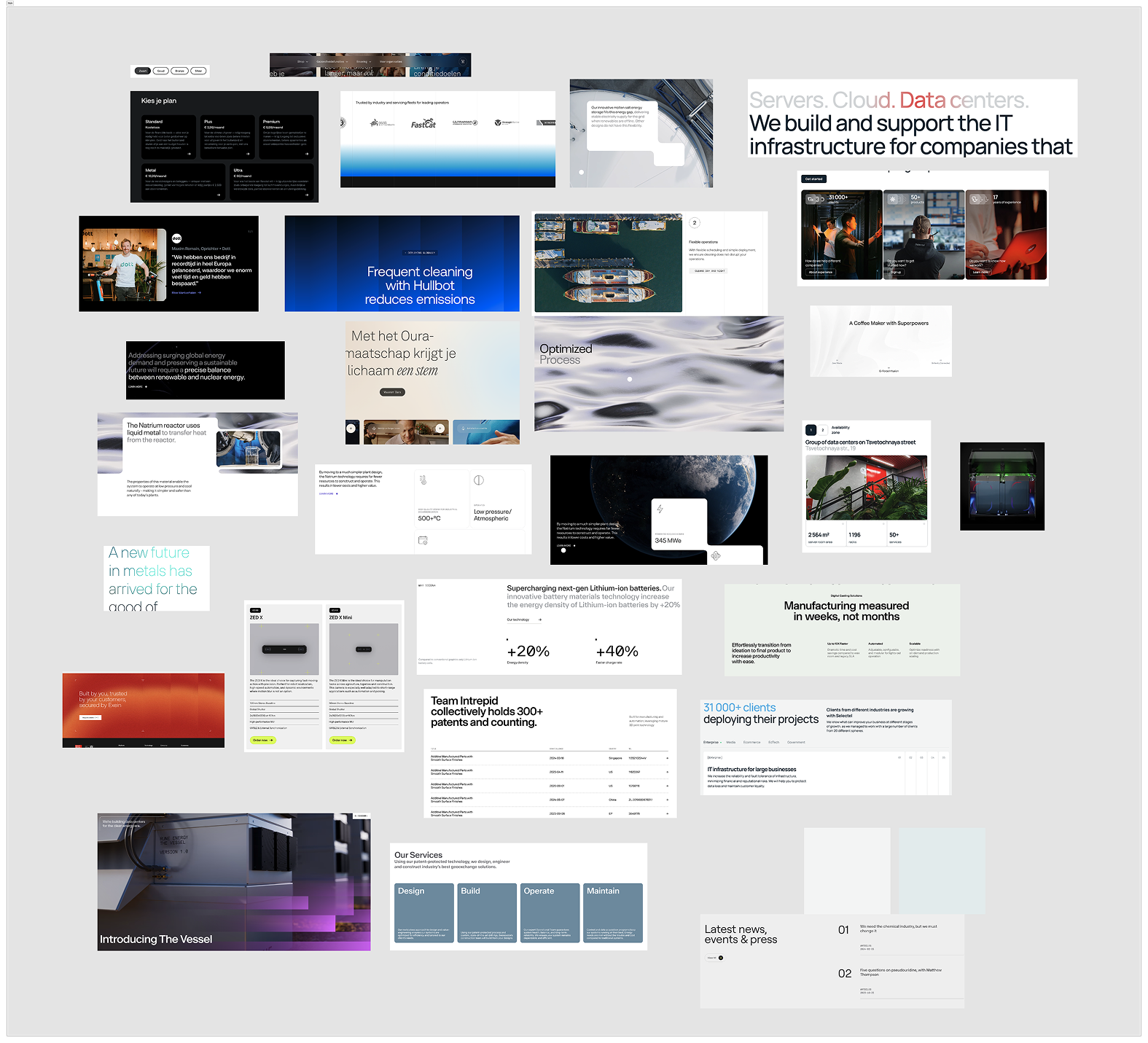
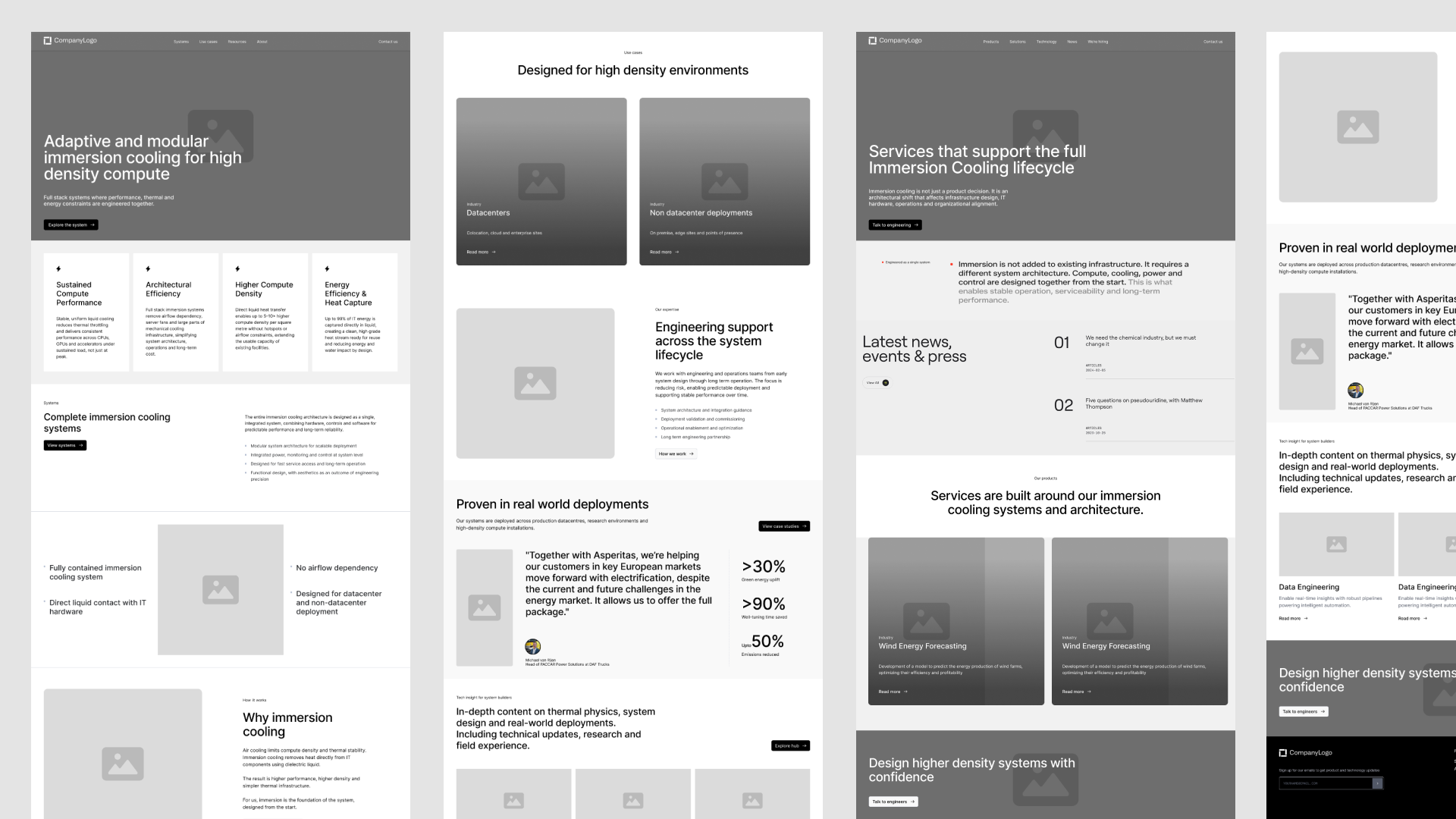
By starting with greyscale wireframes, we could better focus on what content should go on the updated pages without being distracted by design details like colors or fonts. The right page structure for a tech-startup website needs to be focused on providing information about the techincal innovation and offer reassurance with trust sections like case studies, awards, client quotes to minimize the perceived risk compared to traditional solutions.
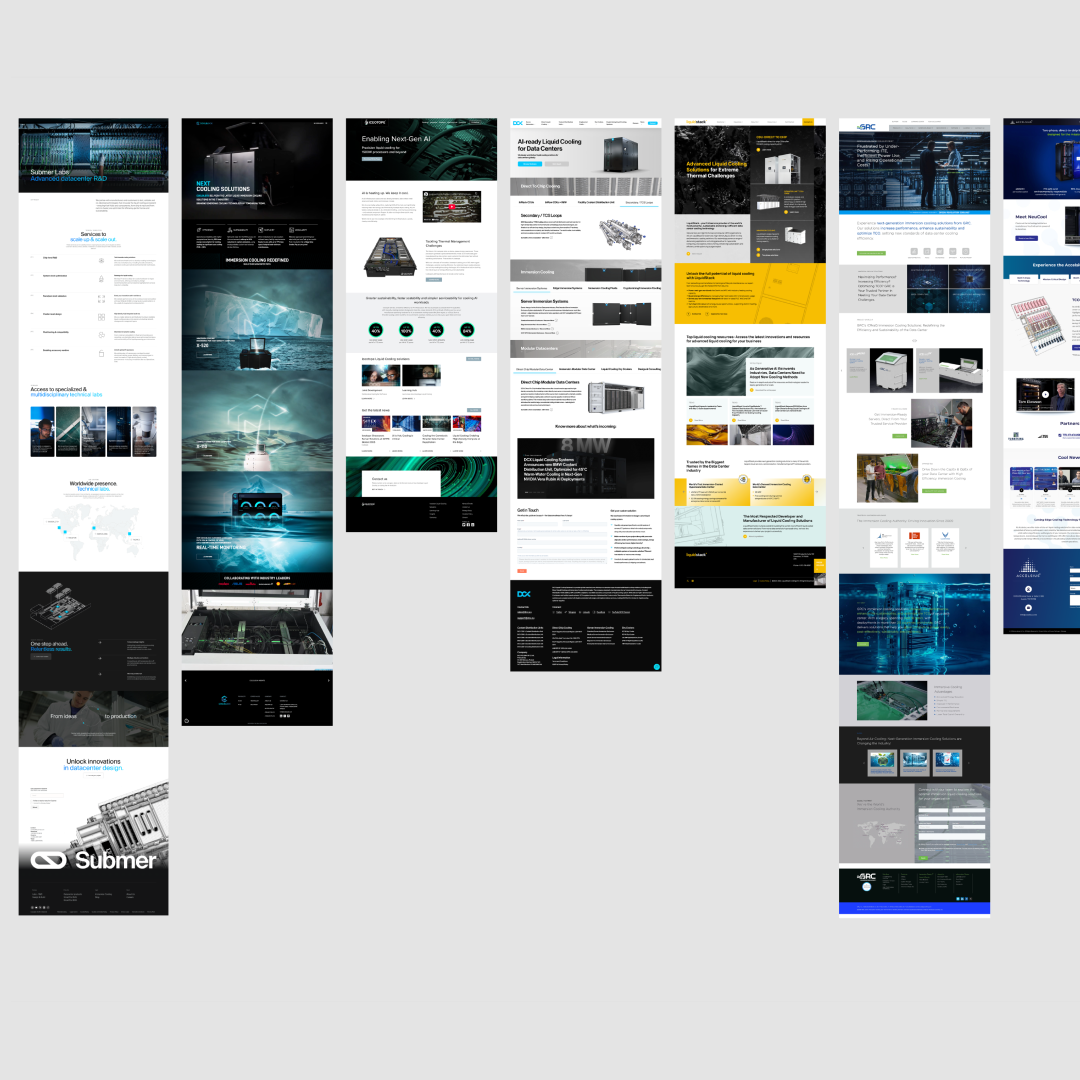
By doing a competitve analysis, it was obvious that most of the competitors were using lots of black, heavy colors, mostly blue, and sharp angles. So we decided to go for a softer, approachable look with rounded corners, lighter colors and more white space. This is also inline with the agreed branding strategy to position Asperitas as a clean, easy to deploy solution.
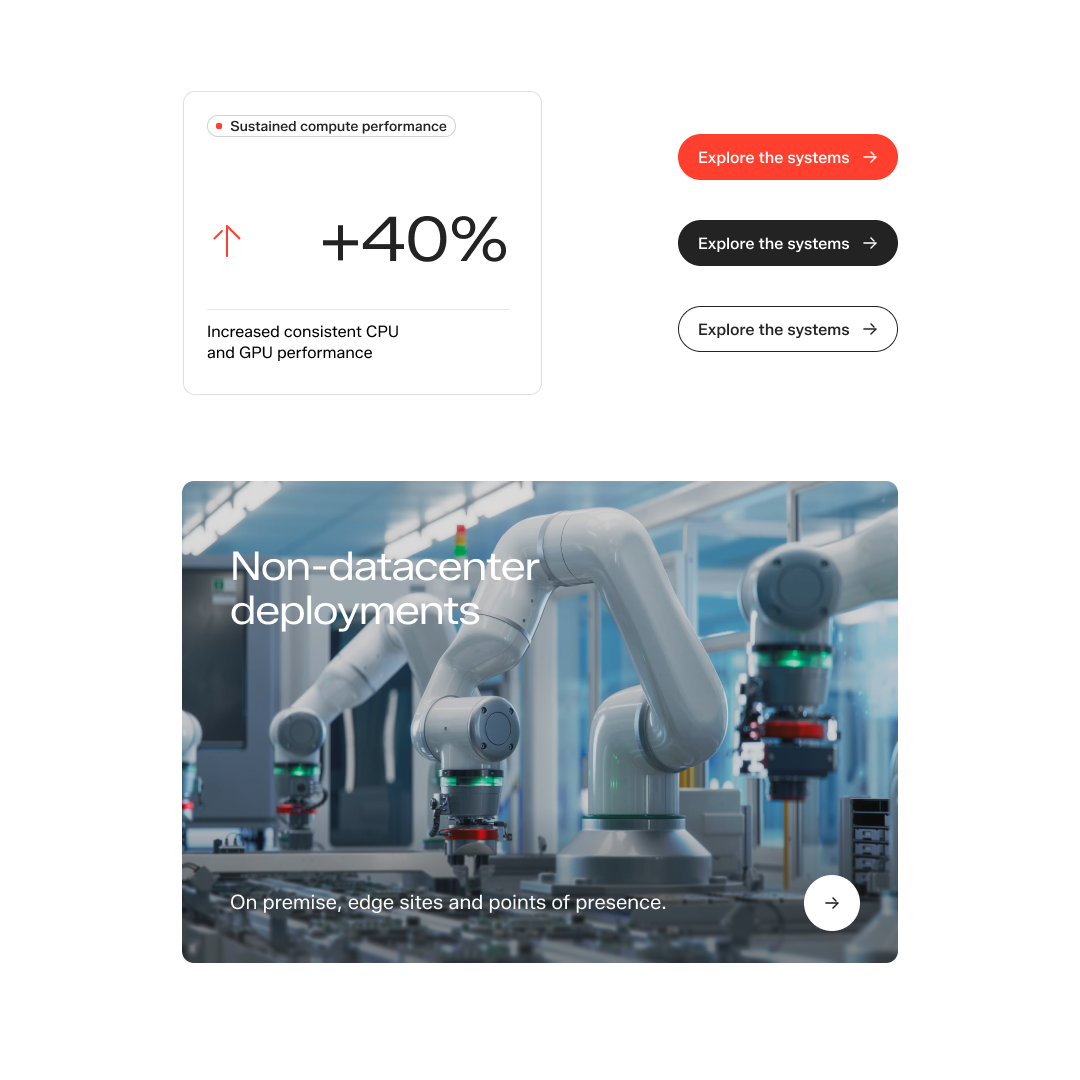
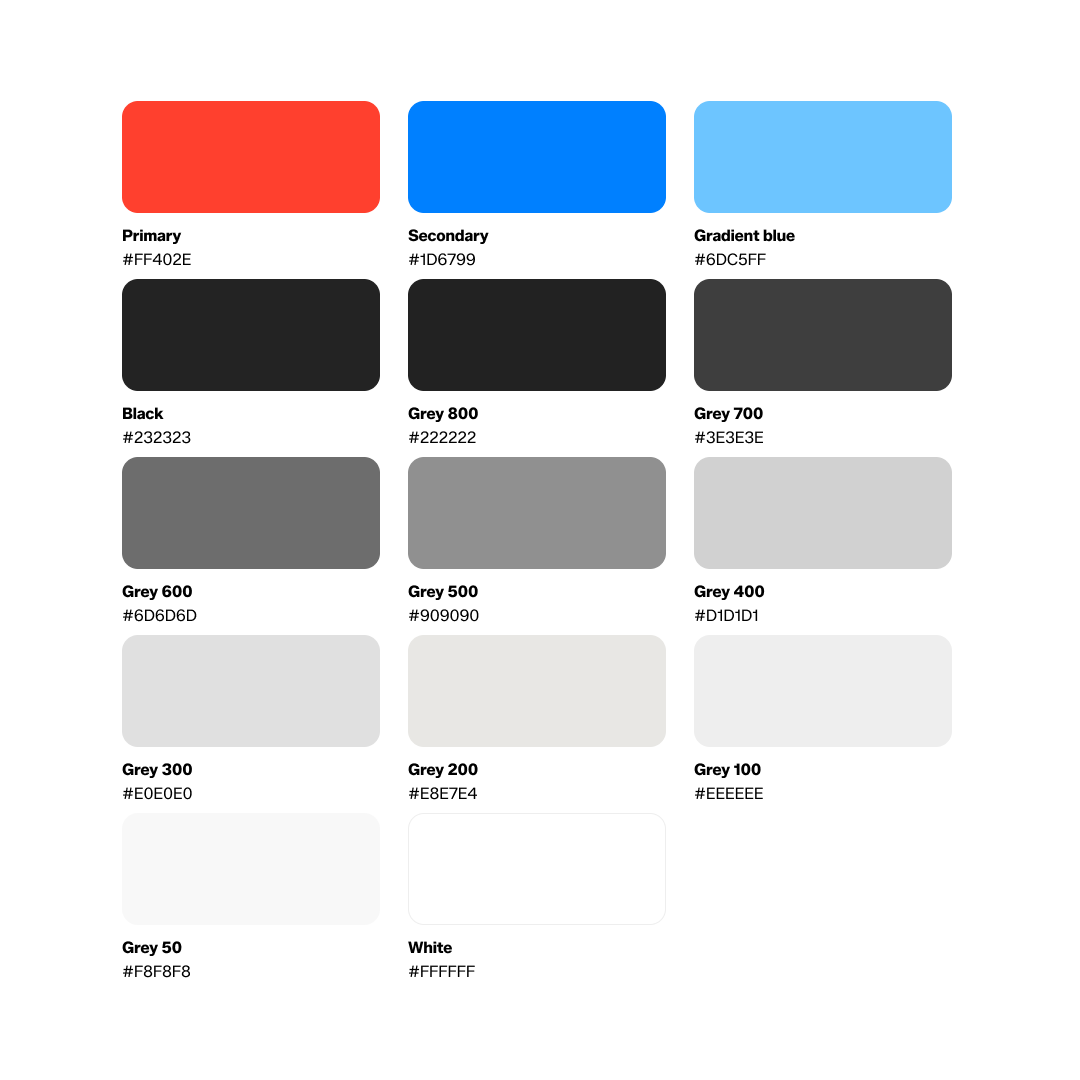
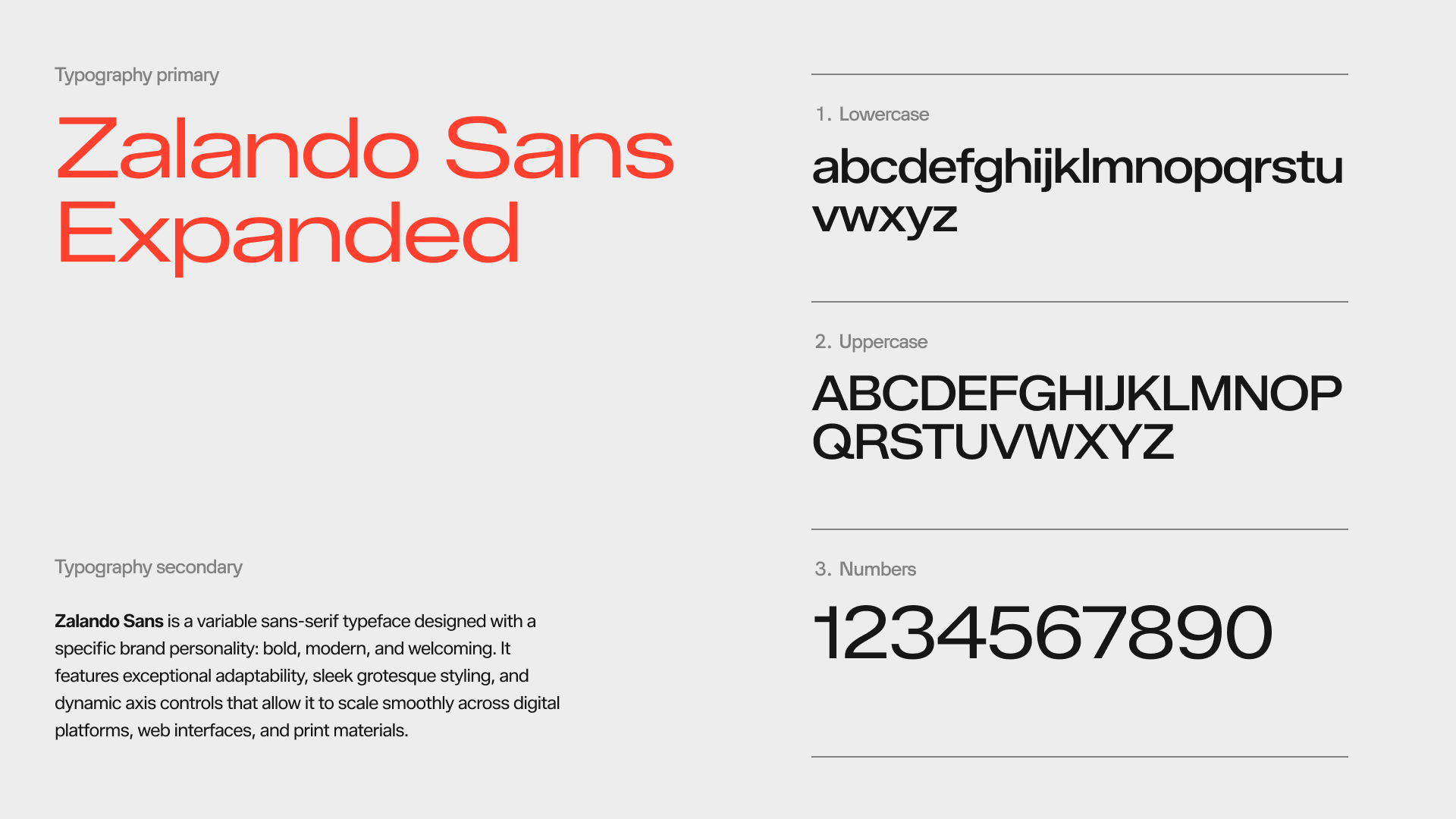
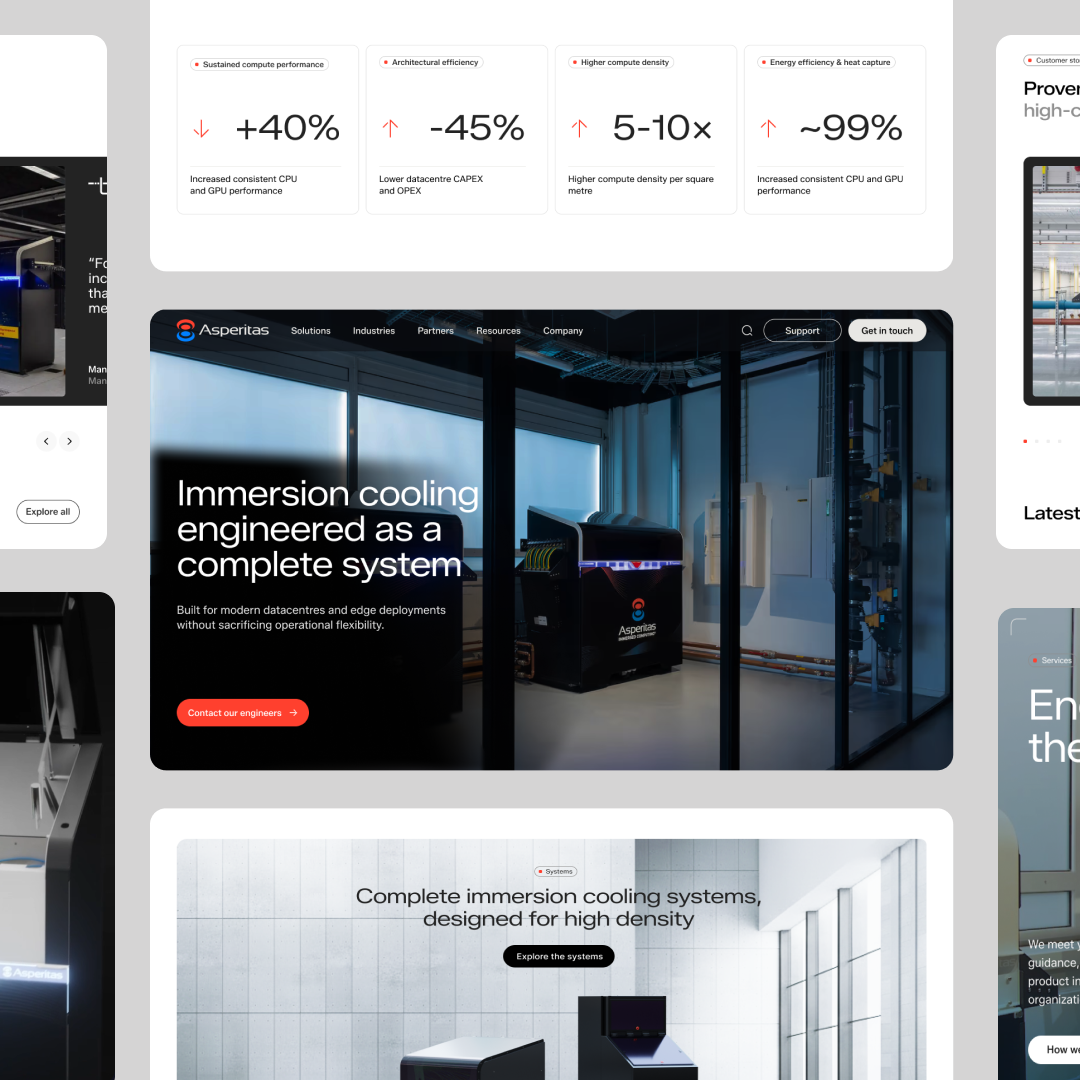
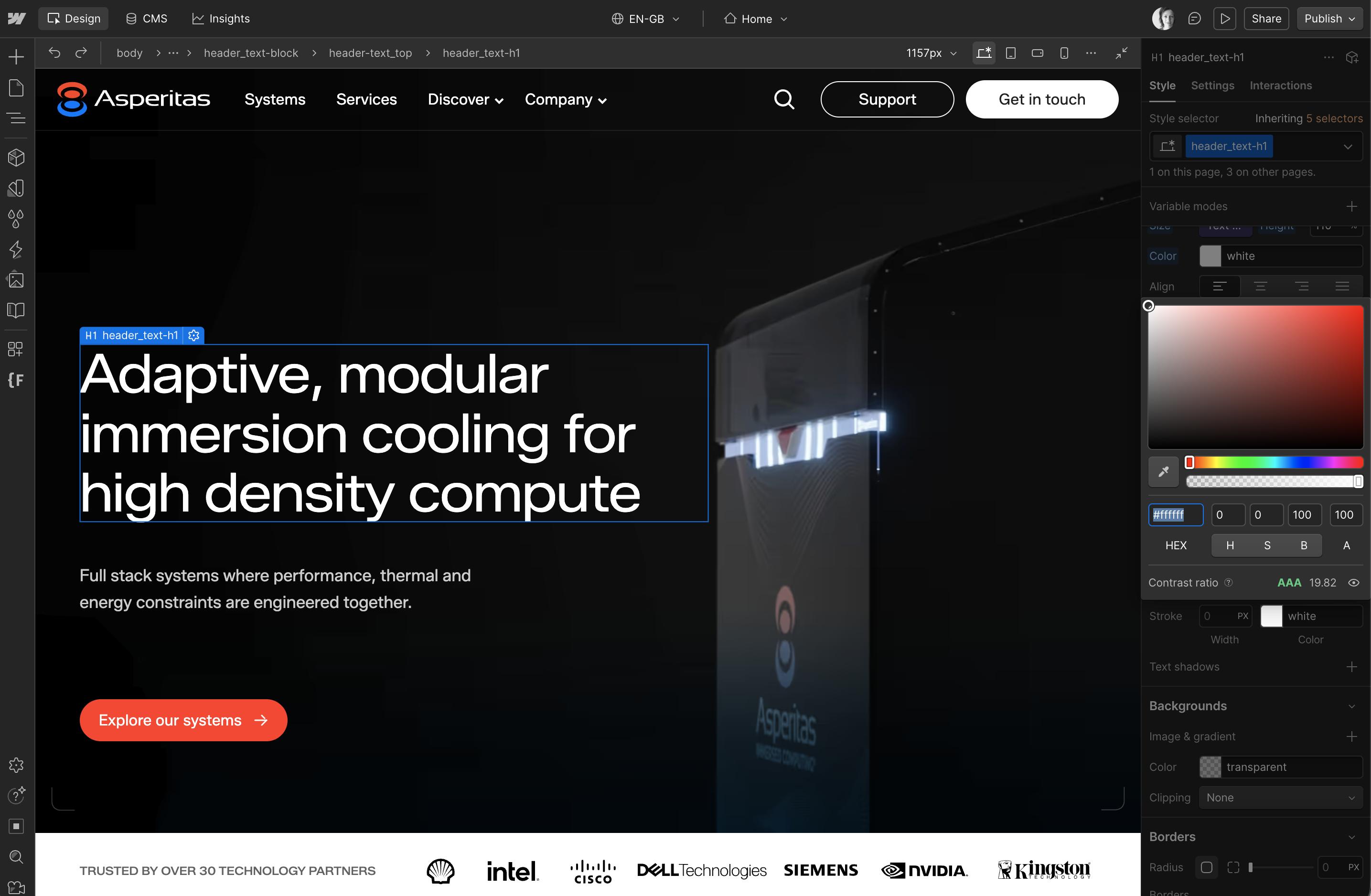
The website is build on the Webflow platform. It is a fast, customizable platform that is easy to interact with using the visual editor. Using components and variables, the website is modular and allows for new pages to be easily created by the marketing team.
For the launch, I prepared a video introducing the new product and it's features using a 3D animation created in Blender. The engineering team provided the system CAD file and some guidelines regarding the materials the system was made of. I imported this CAD file in Blender where I added textures, lighting and camera animation. The text was added in Canva over the video to allow the marketing team to easily make changes until the last moment, on a very tight deadline.